
Blog 14 Editing
- danliu3
- Mar 12, 2024
- 4 min read

Updated: Apr 1, 2024
For the editing in our team, as we discussed the order of specific cut while we were filming, Howard first put those shots together according to the plan. Then, I and Louis assisted the editing process through making detail changes on the rhythm and colour.
(The current version before rough cut screening)

We used DaVinci Resolve for the whole editing process.
Notes: Many inspiration and references of how did I structure the 'editing (order of shots) are included in blog 10 and previous blogs)
Main issues we encountered during our editing process:

1.At the beginning:
This part of editing followed our story board, the main thing is to match up the beat with the cut. We first thought just to start with shots of faces and then go into the detail of the set up and establish the relationship. However, I found out that it would be more coherent to start with close ups of objects and then slowly reveal everything in the environment. This makes the narrative more seductive while bringing the audience into this abstract world that is hard to follow.
The final order of the shot:

Another issue is the exposure. As the factory was very dim and we had to use strong lighting to show the detail, the yellow part has overexposure issue. Which makes the scene feel fake and plain and lack of depth. However, this can also be a deliberate design of frame story - the whole Mv is all a performance of the protagonist. In addition, the colour is sightly shifted to the green spectrum.
2. Lighting and Colour

The lighting problem became very serious in the later part of the editing. We changed around the white balance using the 'curve' to achieve a more neutralized effect. The highlight is reduced to show a cinematic feeling.

We first went with a green colour tone, but it is too over whelming so we added more red in the later part of the editing. Decreasing the highlight also created another problem, it is that the yellow shifted to orange, which looks like a weird neon colour.

3.Filters and artistic processing:


We explored the idea of a frame story - the protagonist being inspected by the audience, trapped inside this factory and unable to find an exit. For example, the monitor effect to add another layer to the story. This idea is similar to the original Mv of 'Lemon Tree', where the man watched the band perform while traveling by transparent container.


Another is the blurring effect (old TV - low signal), this works hand by hand with the monitor effect. Further amplifying the idea of living in a fake world - inside the 'Truman show' (where his whole life is just an entertainment show). As the story progresses and the dark horror is revealed, we made the colour and lighting more green and unnatural.

Another interesting point about this editing approaching is something like the game 'Five Nights at Freddy's', where the players watch the 'monster teddy bear' through monitors.
The player takes on the role of Mike Schmidt, a night security guard at a family pizzeria. Schmidt must complete his shifts without being confronted by the homicidal animatronic characters that wander the restaurant at night. The player has access to security cameras to monitor the animatronics throughout the shift, and a set of steel doors that can lock out the characters. Using the cameras and doors consumes the player's limited electricity, and draining all of the power causes these tools to become inoperable.

This is a very good example on how to explain our use of the 'monitor filter', as well as the twist between the whimsical comedy and dark horror. Just like the toy bear 'Freddy' in the game, LuZhou (our artist) looks naive and funny by its weird outfit and clown make ups. However, the isolation suit blocks the appearance hidden inside. There is a sad clown paradox on protagonist and the audience slowly realized the nature of the 'Yellow Cordon' (our artist stage name).
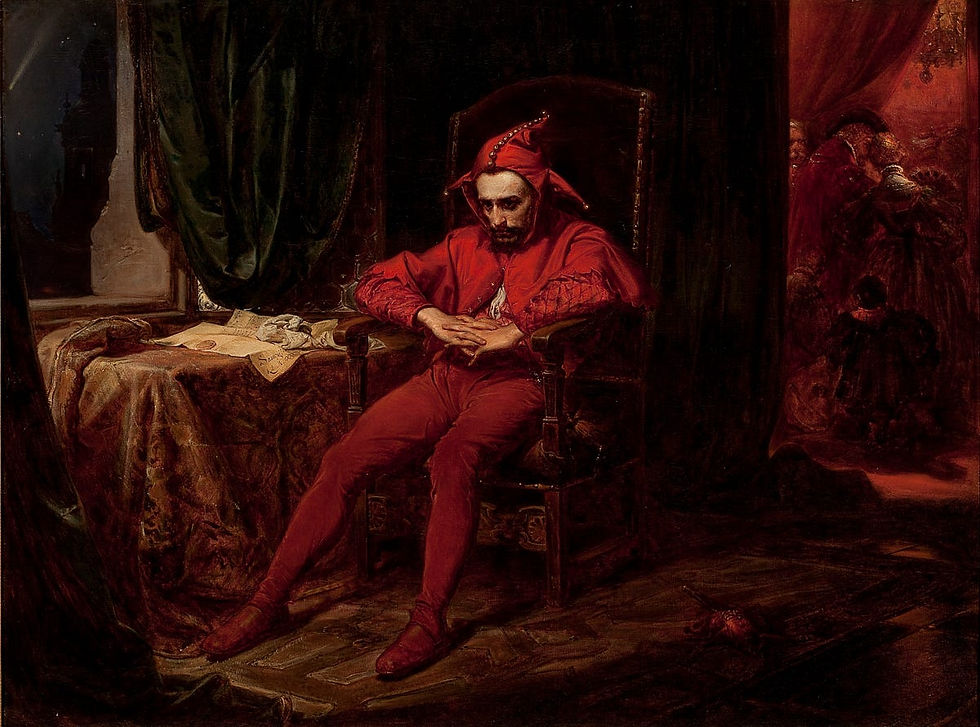
The sad clown paradox is the contradictory association, in performers, between comedy and mental disorders such as depression and anxiety.[1][2] For those affected, early life is characterised by feelings of deprivation and isolation, where comedy evolves as a release for tension, removing feelings of suppressed physical rage through a verbal outlet
4.For special shots:
During the filming, there are several shots that are out of focus. For example, this shot for the line 'Isolation is not good for me', the extreme close up is not totally in focus, while this shot last for a considerable amount of time, so we decided to insert two glitches of Louis holding the bloody axe. While the 'glitching' enhances the idea of the audience is watching a TV show, the out of focus shot is not that obvious to the audience. This sequence acted as a turning point of the Mv from comedy to horror. Originally, we struggled to make the story linealso foreshadowing the later scenes that contain bloods.

5.At the end:
For the ending, we choose a similar approach to the beginning part. We felt it was too empty to only show Louis's singing, while we need to fit the editing style with the climax of the song. We used fast cuts to illustrate the unstable psychological mood, and revealing the ‘massive hemorrhage’. The idea is to cut on beat and create present a horrified mood. Another issue is that because the clip of Louis smearing the blood is very slow, so it would be very hard to notice that actually the area of the blood increase and covered his body. Therefore, by cutting and choosing key frames, we shortened this scene and made it effective.


The last part of the Mv is based on the key line 'Its just another lemon tree.' This set up the main theme of confusion - unable to find redemption - just trapped inside a routine, so we choose to use layers fades to present the dizziness while Louis is shaking his head like he is experiencing a headache.

This acts similar to the Music Mv 'The Killing Type' by Amanda Palmer, where she uses this structure of revealing blood and violence in the later part of the narrative.



Comments